
The Insolvency and Bankruptcy Board of India (IBBI) has lifted the restriction to allow the same insolvency professional for the resolution process of a company as well as its personal guarantor for a better harmonisation and effective coordination of both processes. The changes made to IBBI - Bankruptcy Process for Personal Guarantors to Corporate Debtors, Regulations, 2019 -- came into effect on January 31. IBBI has also amended the provision regarding the meetings of the Committee of Creditors to make them mandatory in insolvency matters about personal guarantors.

The Union government is projected to share about 32 per cent of central taxes with states during the financial year 2024-25 against the 15th Finance Commission's recommendation of 41 per cent. The Revised Estimates (RE) for FY24, too, show a similar share of states in the central taxes at 32 per cent. In absolute terms, however, there has been an increase in the amount devolved to states compared to the Budget Estimates (BE) for FY24 at Rs 11 trillion.

Although India-US relations have strengthened significantly in recent years, partly because of the security situation in the region, the Indian policy establishment would have to be prepared to protect India's interests in a world that could get more unpredictable.

Certain changes in the past two or three years could have a long-term structural impact on the IT services market.

In recent times, more and more audit firms have challenged company managements, some going to the extent of resigning on the ground of incompatibility with what the management wanted or was doing. This, said Ajay Bhushan Pandey, chairman of the National Financial Regulatory Authority (NFRA), in a media interview, was a good sign. Now, the national accounting watchdog has turned the spotlight on audit firms themselves.

The five warmest years in Indian weather history have occurred in the past 14 years -- the others being 2009, 2017 and 2010, in order of intensity.

The biggest bounce is in the realty sector, where the industry index jumped 80%. There's been a turnaround also in automobiles and ancillaries (up 45%). The pharma and health care indices have a welcome return of roughly 35%.

Lower-paid IPL players, domestic or foreign, should be able to try their luck in other T20 tournaments.

For many developers, it may not be a sufficient saving to make it worth creating and maintaining alternatives.

India is expected to be the top recipient of remittances in 2023 as inflows increase 12.4 per cent to $125 billion, said a World Bank report on Tuesday. Mexico will come next by receiving $67 billion and China will follow it at $50 billion. The key drivers for remittance growth in 2023 are a tight labour market in the United States, high employment growth in Europe reflecting extensive leveraging of worker retention programs, and a dampening of inflation in high-income countries. India's growth in remittances is expected to halve to 12.4 per cent in 2023 from a historic peak of 24.4 per cent in 2022.

If they wish to have any chance next year, the Congress and the alliance must quickly settle all issues, draw up an alternative agenda, and create a cohesive campaign.
From almost 60 per cent as of December 2019, the share of liquidations in the mode of closure of total Insolvency and Bankruptcy Code (IBC) cases came down to 44 per cent till September 2023, data by the Insolvency and Bankruptcy Board of India (IBBI) shows. Experts say the decreasing trend in liquidations under the IBC in India can be largely attributed to the initial economic conditions of companies entering the Corporate Insolvency Resolution Process (CIRP). IBC experts also say the trend shows a certain stabilisation in IBC with the Code now rid of legacy bankruptcy issues.

'India is the sixth-largest market for the Kia Corporation, and contributes 8 to 9 per cent to our global sales.' 'We are eyeing 10 per cent market share over the next few years depending on customer demand and new product innovations.'
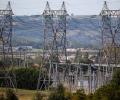
To tackle increasing demand, the Union Ministry of Power has urged central and state public-sector power-generating companies (gencos) and state power and energy departments to pick projects that are undergoing insolvency proceedings. The power ministry is looking at a quicker turnaround of these stressed power plants and enhancing power supply. Increasing demand is pushing states to scout for more power sources. "It is requested that state-owned gencos may be encouraged to participate in the corporate insolvency resolution process (CIRP) of stressed power assets, which are of strategic and commercial significance to the capacity addition plans of the states concerned.

The ministry is of the opinion that there is a need for a rigorous regime for large unlisted companies, in contrast with the current "light-touch" regulation. "There is a defined regime for listed companies, by the Securities and Exchange Board of India (Sebi). "There is a view in the ministry that it needs to look at a framework for large unlisted companies," the senior official said.

The finance ministry on Thursday sought to clarify that there was no distress in household savings and the data indicated that changing consumer preference for different financial products was the real reason for the change in the pattern of household savings. The clarification comes in the backdrop of Reserve Bank of India data showing that household net financial savings rate is at its lowest in decades, at 5.1 per cent of GDP in FY23 compared to 7.2 per cent of GDP in FY22. The divergence in the data for household gross financial assets and liabilities is not a cause for concern for the government, as the loans have largely been taken to buy real assets or automobiles, the finance ministry said.

'To get a 100 per cent consensus document without any reservation, any bracket, any chair summary is unprecedented in the history of multilateral forums.'

Auditors seem to have developed a heightened sense of risk and are not content to tick the boxes and sign the papers.

'I'm pitching India for the strengths we offer, including the English language, engineers, doctors, nurses, professionals, innovative talent of startups.'

Crypto assets should not be granted official currency or legal tender status, the much-awaited synthesis paper by the International Monetary Fund (IMF) and Financial Stability Board (FSB) has said ahead of the G20 leadership summit under India's presidency. However, the report has argued against a blanket ban on activities linked to crypto assets, explaining that such a move can be costly as well as technically demanding to enforce. Central banks should avoid holding crypto assets in their official reserve as they pose a risk to monetary and global financial stability, according to the synthesis paper.
 © 2026 Rediff.com - Investor Information - Advertise with us - Disclaimer - Privacy Policy - Sitemap - Feedback - About us - Terms of use - Grievances